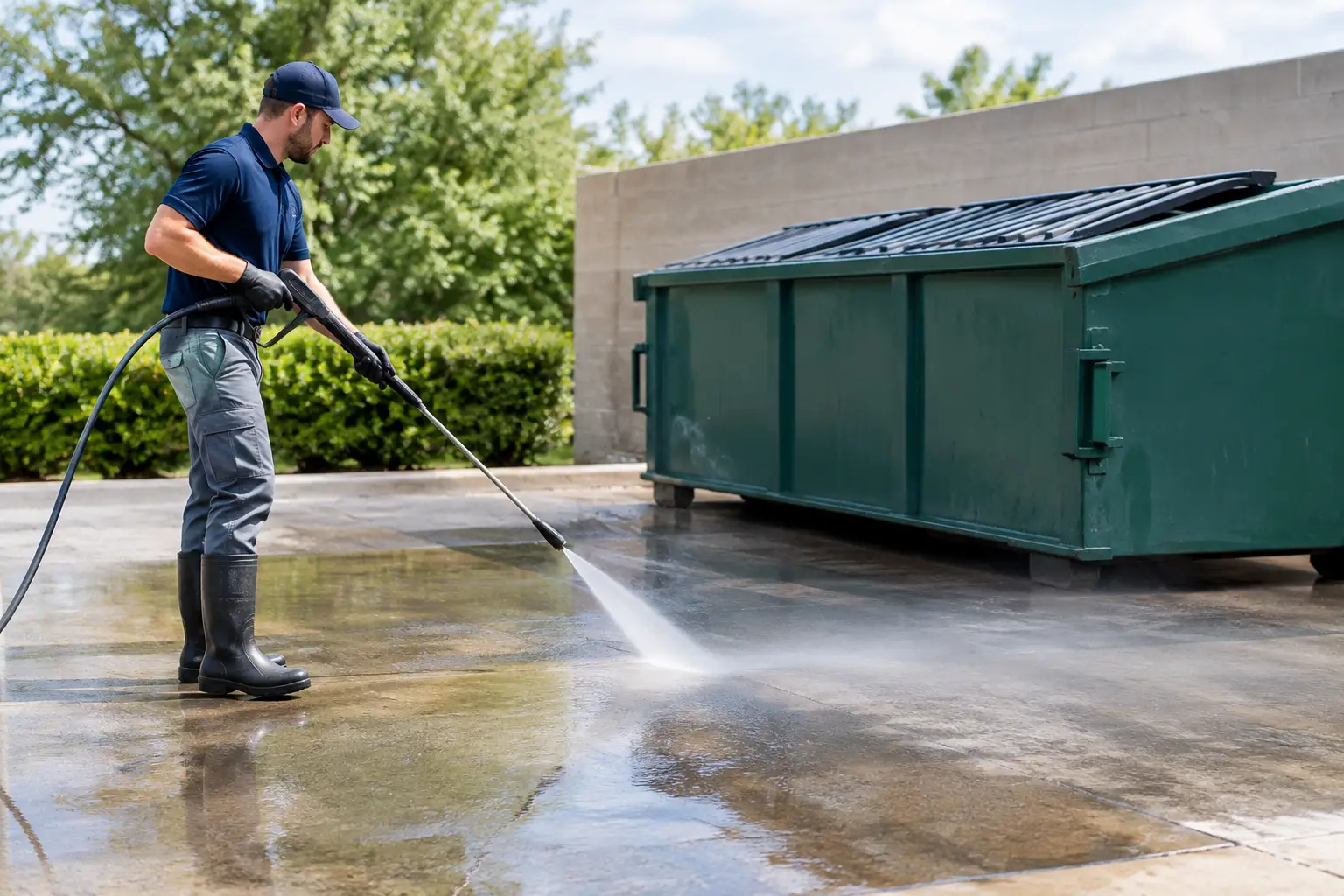
A dirty dumpster pad can become a business problem fast. Grease, food residue, leaking bags, standing water, and windblown debris create odors, slip hazards, pest activity, and a poor impression for tenants, customers, and inspectors. Knowing how to clean dumpster pads the right way helps protect your property without creating a runoff issue at the same time.
For restaurants, supermarkets, retail centers, office buildings, and other commercial properties in New York City and Long Island, the goal is not simply to make the area look better after pickup day. A good cleaning routine removes buildup, keeps the enclosure usable, and gives your waste hauler a safe, accessible place to work.
Start With Safety and Site Control
Clean the dumpster pad when containers are empty or as close to empty as possible. Trying to wash around an overflowing container is inefficient, and moving loose waste by hand increases the risk of cuts and exposure to contaminated material. Schedule the work shortly after collection when practical.
Before anyone starts, wear appropriate personal protective equipment: work gloves, slip-resistant boots, eye protection, and clothing that covers exposed skin. Add a face covering if strong odors, dry debris, or chemical sprays are involved. Staff should never reach into a container or try to compact loose trash manually.
Check the area for immediate hazards. Broken glass, needles, sharp metal, damaged lids, loose wheels, and pooled liquid all need attention before washing begins. If a dumpster is damaged, overloaded, or leaking heavily, document the condition and contact the responsible vendor or property manager rather than trying to force a repair on-site.
Keep pedestrians, delivery staff, and vehicles clear of the work area. On a busy commercial property, cones and a temporary barrier are a simple way to prevent someone from walking through a wet, slippery pad.
How to Clean Dumpster Pads Step by Step
The best process uses dry cleanup first and controlled washing second. Starting with a pressure washer before removing loose waste can spread contaminated debris and push it toward storm drains.
Remove Loose Trash and Debris
Pick up bags, cardboard, bottles, food scraps, and other loose materials around the dumpster. Sweep the pad, enclosure corners, curb line, and the area behind the container. Pay close attention to grease-soaked cardboard and waste trapped under wheels or around loading areas.
Put collected material into the appropriate waste or recycling container. If the amount of debris is larger than your regular service can handle, arrange for additional collection or a roll-off container instead of letting bags accumulate beside the dumpster.
Dry Up Spills Before Adding Water
Oil, grease, cooking residue, and dumpster leakage should be absorbed before the pad is washed. Use absorbent material suited for the spill, allow it to work as directed, then sweep it up and dispose of it according to the product instructions and your applicable local requirements.
This step matters most at food-service locations. Hot water and high pressure may make a grease stain look like it disappeared, but they can also carry the grease farther across the pavement or into the drainage system. Absorb first, then clean the remaining film.
Protect Drains and Control Runoff
Dumpster-pad wash water is not automatically clean water. It can carry food waste, bacteria, grease, cleaning chemicals, and residue from the container. Before rinsing, identify every nearby storm drain, catch basin, and low point where water can collect.
Use drain covers, berms, wet vacuums, or other containment methods appropriate for the property. The right approach depends on the pad layout, the amount of buildup, and local drainage rules. Do not let dirty wash water flow across a parking lot, sidewalk, alley, or into a storm drain.
For properties with frequent grease buildup or large container areas, a professional cleaning contractor may be the more dependable choice. They can use recovery equipment to collect wastewater instead of leaving facilities staff to manage a difficult runoff problem with a hose and a mop.
Apply the Right Cleaner
Use a commercial degreaser or neutral cleaner that is appropriate for concrete or asphalt and follow the dilution instructions exactly. More chemical is not always better. Over-concentrated products can leave residue, damage surfaces, create strong fumes, or make wastewater handling more complicated.
Apply cleaner to the stained areas and give it enough dwell time to break down the buildup. Do not allow the product to dry completely on the surface. For heavy grease, scrub with a stiff deck brush before rinsing. A low-pressure rinse is often sufficient for routine maintenance; pressure washing is better reserved for stubborn buildup and should always be paired with runoff control.
Avoid mixing chemicals. Bleach, acids, ammonia-based products, and degreasers can react in dangerous ways. If disinfecting is necessary after cleaning, use a compatible product according to its label, and keep staff out of the area until the surface is dry.
Recover Water and Let the Pad Dry
Collect wash water with a wet vacuum, squeegee it toward a contained recovery point, or use a contractor equipped for wastewater recovery. Dispose of recovered water only through an approved method for your site. Do not assume it is acceptable to pour it into a drain, gutter, or landscaped area.
Once the pad is clean, allow it to dry fully before reopening the area. Replace the dumpster in its normal position, check that lids close, and make sure access is clear for the next scheduled collection.
Set a Cleaning Frequency That Fits Your Waste Stream
There is no single schedule for every business. A medical office with bagged office waste may need basic sweeping and spot cleanup each week, while a restaurant, grocery store, or convenience store may need attention several times a week and a more thorough wash on a regular basis.
The right frequency depends on what goes into the container, how often it is collected, whether the enclosure is covered, and how much traffic the area receives. In warm weather, odor and pest concerns usually require more frequent service. Rainy periods can also expose drainage and pooling problems that are easy to miss during dry weather.
A practical routine includes daily checks for loose trash and leaks, weekly sweeping, and scheduled deep cleaning based on actual conditions. Keep a simple log of cleanings, spills, pest activity, and container damage. That record helps property managers identify whether the real issue is inadequate pickup frequency, an undersized container, poor loading practices, or a worn-out dumpster.
Prevent the Next Mess
Cleaning is necessary, but prevention lowers labor costs and keeps the pad in better condition between washes. Make sure employees and tenants know that bags belong inside the container, lids should remain closed, and cardboard should be broken down before it is placed in recycling. Do not allow loose waste, used cooking oil, paint, chemicals, or bulky items to sit beside the dumpster.
Check that the container size and pickup schedule match the volume your location produces. Overflowing containers often cause the very mess that staff are then expected to clean. Restaurants and supermarkets may need separate organics service or a more frequent collection schedule, while high-volume locations may benefit from a compactor that keeps waste contained and reduces overflow.
The condition of the enclosure matters, too. Repair cracked concrete, damaged gates, poor lighting, and uneven drainage. A pad that slopes toward the building or a storm drain needs more than a stronger cleaning product. It needs a property-maintenance solution.
When to Call for Waste Service Support
If your dumpster pad is regularly overflowing, smells bad shortly after cleaning, or has repeated loose-trash issues, the problem may be operational rather than housekeeping. A local commercial waste provider can review your collection frequency, container type, recycling setup, and special waste needs.
Crown Waste Corp. works with businesses across New York City and Long Island to build practical waste plans around how each site actually operates. Reliable scheduled service, the right equipment, and responsive support can make dumpster-pad cleaning more manageable before it becomes a recurring headache.
A clean pad is easier to maintain when the waste system behind it is working properly. Give your team a clear routine, keep water and chemicals under control, and address overflow or container issues early so the area stays safe for every pickup, every employee, and every visitor.
Leave a Reply