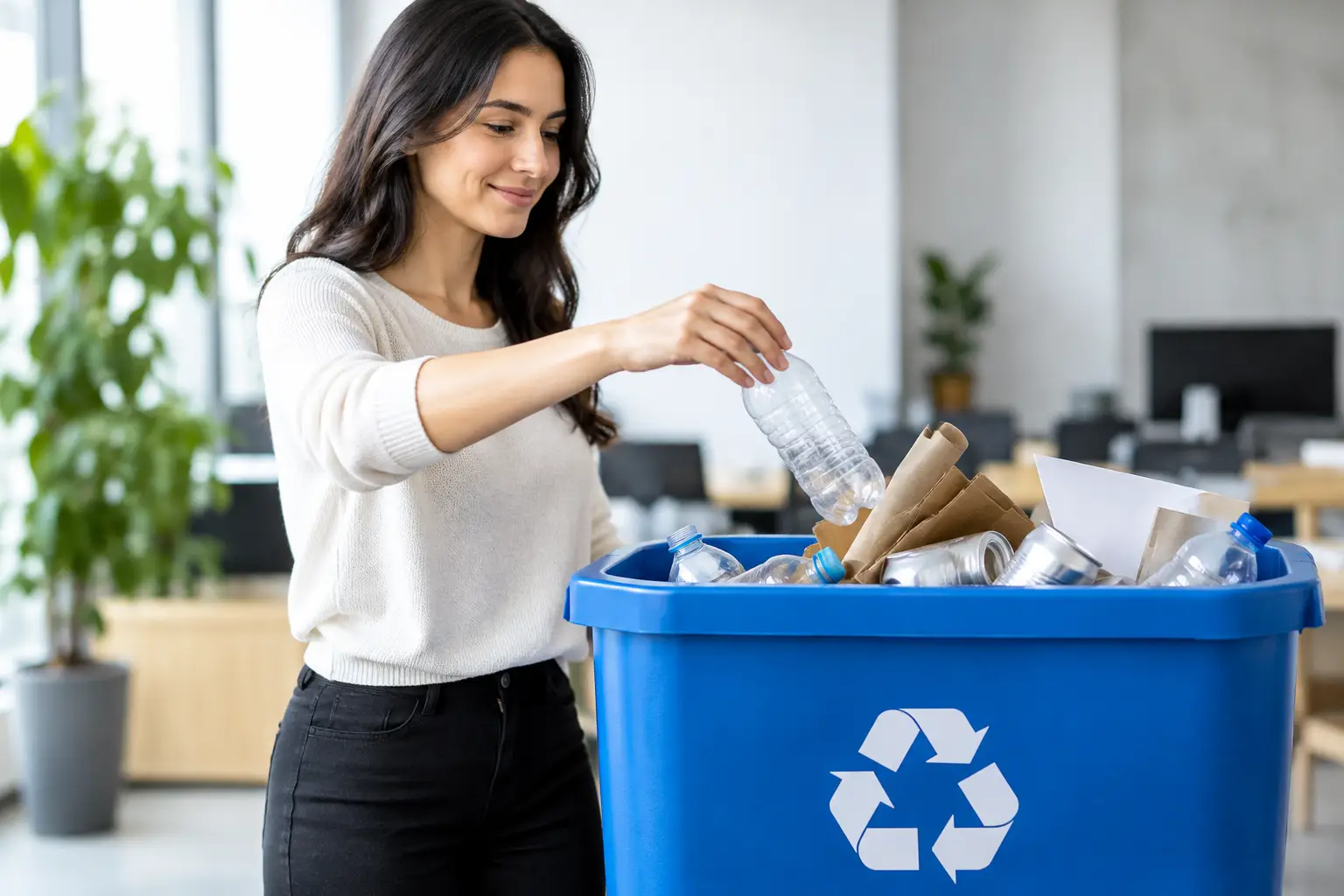
A busy storefront should not need a row of separate bins to recycle responsibly. So, what is single stream recycling? It is a collection system that allows businesses to place accepted recyclable materials into one designated recycling container. Paper, cardboard, metal cans, glass bottles and jars, and many plastic containers are collected together, then sorted at a recycling facility.
For businesses across New York City and Long Island, the value is practical: fewer containers, a clearer routine for employees, and a more manageable way to keep recyclable materials out of the trash. The system works best when the materials going into that one bin are clean, dry, empty, and accepted by the local recycling program.
What Is Single Stream Recycling?
Single stream recycling means recyclables are mixed together at the point of disposal rather than separated into individual paper, plastic, glass, and metal bins. Your waste hauler collects the material and transports it to a material recovery facility, often called an MRF. There, equipment and trained workers separate materials by type so they can be processed and sold to manufacturers for reuse.
The word “single” refers to the collection stream, not to a single material. A restaurant, office building, retail store, or property manager can give staff and tenants one recycling container for the accepted items instead of asking them to sort several categories correctly before pickup.
That convenience matters in commercial settings. Employees are moving quickly, loading deliveries, serving customers, cleaning up, or managing tenants. A recycling program that is difficult to follow often becomes a trash problem. Single stream collection removes one major barrier, but it does not mean every item with a recycling symbol belongs in the bin.
What Usually Belongs in a Single Stream Recycling Bin?
Accepted materials vary by municipality, hauler, and processing facility, so businesses should follow the guidance for their specific service area. In general, commercial single stream recycling often accepts clean paper and cardboard, aluminum and steel cans, glass bottles and jars, and eligible plastic bottles, jugs, tubs, and containers.
Cardboard deserves special attention because it can quickly take over a loading area or dumpster enclosure. Flattening boxes before placing them in a recycling container saves space, reduces overflow, and makes collection more efficient. For retailers, supermarkets, offices, and businesses receiving frequent deliveries, that simple step can make a noticeable difference in the number of trash pickups needed.
Containers should be emptied before recycling. A small amount of residue may be unavoidable, but food, liquid, grease, and other contaminants can ruin otherwise recyclable material. There is no need to make every jar spotless. The goal is to remove the contents and keep the recycling load reasonably clean and dry.
What Should Stay Out of the Bin?
The biggest challenge in single stream recycling is contamination. When the wrong items enter the container, they can create sorting problems, damage equipment, contaminate paper, or cause an entire load to be rejected. Wish-cycling – placing an item in the bin because it looks recyclable – is a costly habit for commercial locations.
Plastic bags and film are common examples. They can wrap around sorting equipment and generally should not go into a single stream recycling bin. Food waste, soiled paper products, disposable cups with food residue, foam packaging, batteries, electronics, medical waste, propane cylinders, and hazardous materials also need separate handling.
Bagged recyclables can be another issue. Loose material is usually easier for processing facilities to sort, while opaque bags hide their contents and may be treated as trash. If your operation needs bags for sanitation or storage reasons, confirm the appropriate method with your hauler before setting material out.
Organic material belongs in an organics program where required or available, not in the recycling stream. This is especially relevant for restaurants, supermarkets, schools, and food-service operations. Keeping food scraps separate from bottles, cans, paper, and cardboard protects the quality of both recycling and organics collection.
How the Sorting Process Works
After collection, mixed recyclables are delivered to a material recovery facility. The material moves through a series of screens, conveyors, magnets, optical scanners, air jets, and manual quality-control stations. Cardboard and paper are separated by size and shape. Magnets pull out steel cans, while other systems identify aluminum and certain plastics. Glass is broken down and separated for further processing.
This process is sophisticated, but it has limits. A facility can sort many common containers and fibers efficiently. It cannot turn greasy pizza boxes, food-filled containers, tangled plastic film, or dangerous items into usable commodities. Good recycling starts at the business location, long before a truck arrives.
For property managers, that means the bin area matters. Clear signage, enough container capacity, and regular communication with tenants can prevent contamination before it becomes a collection issue. For a small business, it may be as simple as placing the recycling container where employees naturally unpack boxes or dispose of beverage containers.
Why Single Stream Recycling Works for Commercial Properties
The main benefit is participation. When recycling is easier, people are more likely to use it. A single, clearly marked container reduces confusion in offices, common areas, retail backrooms, and loading docks. It also helps businesses keep recyclable volume out of their regular trash containers, which can improve the overall efficiency of a waste program.
It can also simplify site management. Instead of maintaining multiple recycling stations, a business may be able to centralize collection in one accessible area. This is useful for properties with limited storage space, high employee turnover, or multiple tenants with different operating schedules.
Still, single stream is not automatically the best answer for every waste profile. A warehouse generating large volumes of clean corrugated cardboard may benefit from a dedicated cardboard collection approach or equipment that handles high-volume material. A food-service business may need a strong organics program alongside single stream recycling. Construction debris, electronics, and regulated materials require their own disposal plans.
The right setup depends on what your business throws away, how much space you have, local requirements, and the frequency of collection needed. A waste assessment can identify whether a single recycling container is enough or whether separate streams and equipment would reduce costs and improve compliance.
Simple Ways to Keep Your Recycling Program on Track
The best programs are easy to follow at the moment of disposal. Put containers where waste is generated, not in a distant corner employees will avoid. Use direct signage with photos or examples of the materials your location accepts. Train staff during onboarding and revisit the basics when contamination shows up.
Keep trash, recycling, and organics containers distinct in color, labels, and placement. If all containers look alike or are crowded into a confusing enclosure, mistakes are predictable. Make sure the recycling container is large enough for the volume your location creates, especially during delivery days, holidays, or seasonal peaks.
Managers should also check the recycling area regularly. A quick look can reveal cardboard that needs flattening, trash placed in the wrong container, or capacity that no longer matches the business’s needs. Small corrections at the source are far easier than dealing with overflowing containers, missed material, or avoidable disposal charges later.
A Practical Recycling Partner for NYC and Long Island
Commercial recycling should fit the way your business operates, not create another daily task for your team. Crown Waste Corp. provides single stream recycling collection as part of practical waste solutions for businesses throughout New York City and Long Island. The goal is straightforward: dependable pickups, the right container setup, and responsive support when your operation changes.
Whether you manage a restaurant with food waste, an office with steady paper volume, a retail location receiving daily shipments, or a multi-tenant property, the most effective recycling program is the one employees can use correctly every day. Start with a clear bin, clean materials, and service sized to your actual waste stream. That keeps your property cleaner, supports compliance, and gives recyclable material a better chance of becoming useful again.
Leave a Reply