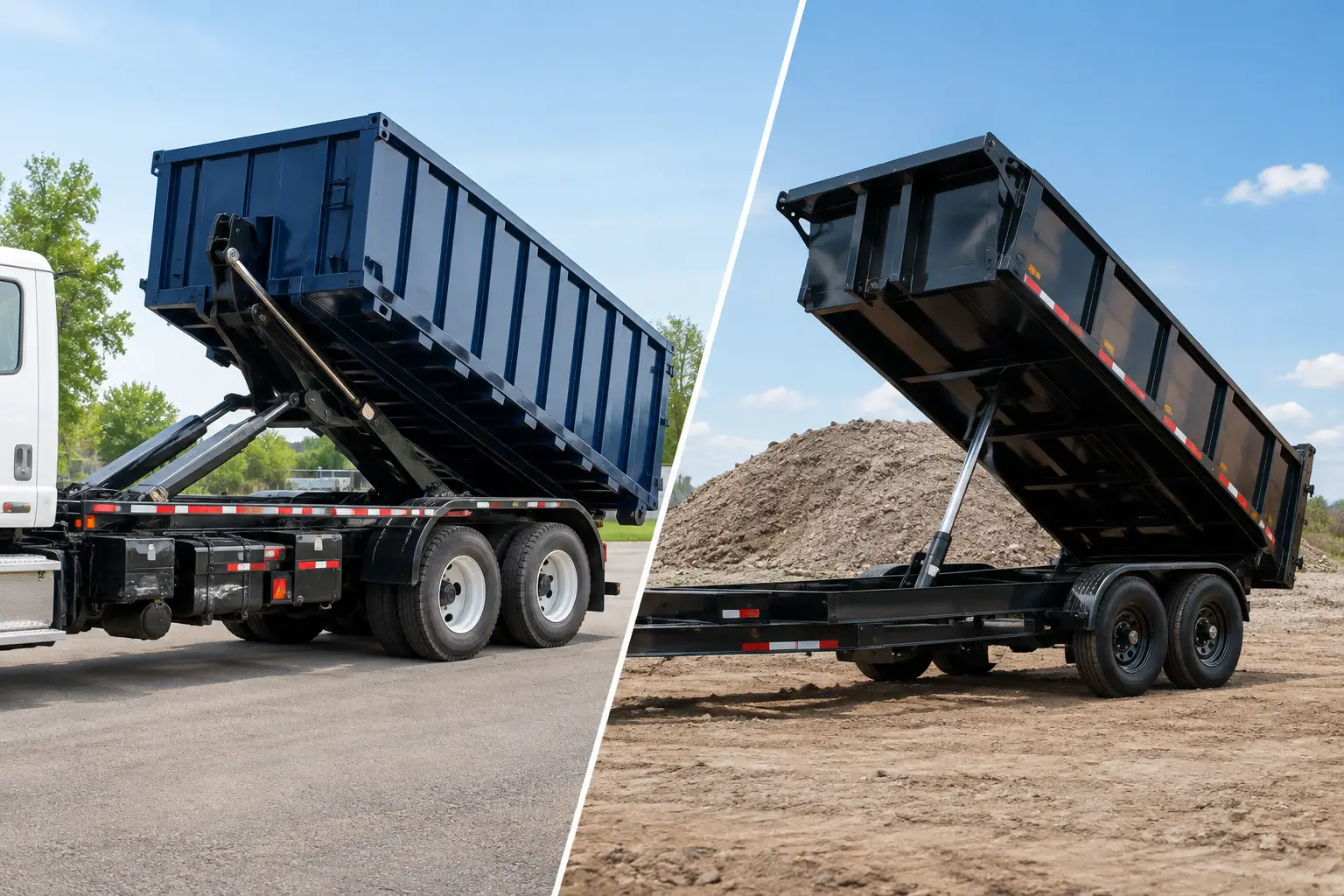
A rolloff versus dump trailer decision can affect more than a cleanup schedule. For a contractor, property manager, or business owner in New York City or Long Island, the right equipment affects where debris can be placed, how safely crews can load it, how often material needs to move, and whether the site stays clear for customers, tenants, and daily operations.
Both options haul waste. They are not interchangeable. A dump trailer is a mobile trailer with its own hydraulic dumping system. A roll-off container is delivered to the site, filled at the pace of the job, then hauled away by a specialized truck. The better choice depends on the waste stream, site access, volume, timeline, and who is responsible for transporting the material.
Rolloff versus dump trailer: the basic difference
A dump trailer is generally owned or rented by a contractor who has a capable truck and plans to haul material personally. Once loaded, the trailer is pulled to an authorized disposal or transfer location, raised hydraulically, emptied, and returned to the job. It can be useful for smaller jobs with frequent, controlled loads and a crew that already handles hauling.
A roll-off container stays at the property while waste is generated. A roll-off truck delivers the container, places it in an approved location, and returns when it is ready for removal or exchange. This makes it a practical choice when a project produces debris over several days or weeks, or when a business needs a dedicated place for bulky waste without assigning an employee to make disposal runs.
For commercial customers, the difference often comes down to labor and responsibility. With a dump trailer, someone on your team is managing towing, loading limits, disposal trips, and vehicle requirements. With a roll-off container, the hauling service handles container delivery, removal, and transportation so your team can stay focused on the work happening on-site.
When a dump trailer makes sense
A dump trailer can work well for a contractor handling a small, short-duration job with predictable debris. Landscaping crews, small demolition teams, and contractors moving soil, brush, or limited construction material may prefer the flexibility of taking a load away as soon as the day is over.
It is also useful when the job site changes often. A crew working at several locations in one day may value having the trailer behind the truck instead of arranging container delivery and pickup at every stop.
That convenience has limits in NYC and Long Island. Towing and parking a loaded trailer can be difficult on tight streets, crowded lots, or sites with active customer traffic. A trailer also requires a properly rated tow vehicle, an experienced driver, and attention to weight distribution. Overloading, unsecured material, and improper disposal can create safety problems and costly delays.
A dump trailer is not automatically the lower-cost choice. The purchase or rental cost is only one part of the calculation. Fuel, labor, truck wear, insurance, disposal fees, and the time spent waiting at transfer facilities all matter. If a foreman or driver makes multiple disposal trips, those hours are no longer available for the job itself.
When a roll-off container is the better fit
A roll-off container is usually the stronger option for projects that generate a steady or significant volume of debris. Construction renovations, retail buildouts, warehouse cleanouts, roofing work, property turnover, and large landscaping projects all benefit from having one designated collection point on-site.
The container gives crews a clear place to put material as they work. That can reduce loose piles around the property, improve housekeeping, and help keep loading areas, walkways, and tenant spaces safer. When the container reaches capacity, the hauler can remove it or swap it for an empty one based on the agreed service plan.
For a property manager, that arrangement can be especially helpful. A building renovation or cleanout may involve several vendors, each producing debris at different times. A roll-off container allows the work to continue without requiring each vendor to coordinate its own disposal trips. One container and one hauling partner can simplify the process.
Roll-off service also makes sense for businesses that do not have a truck, do not want staff towing equipment, or need a dependable disposal plan during a busy project. Crown Waste Corp. works with commercial customers that need containers matched to the job rather than a one-size-fits-all approach. The right container size, placement plan, and pickup schedule can prevent avoidable service interruptions.
Site access and placement should drive the decision
Before choosing either option, look at the physical site. A roll-off truck needs sufficient clearance to enter, position the container, and safely complete delivery or removal. Overhead wires, low branches, narrow driveways, parked vehicles, and tight loading areas can all affect placement.
A dump trailer needs room to turn, park, load, and leave. It also needs safe clearance when the bed is raised for unloading. In dense commercial areas, the trailer may be easier to move than a large roll-off truck in some situations, but it can still create congestion when parked for loading.
The best setup is usually the one that keeps waste close to the work without blocking fire lanes, deliveries, customer access, or normal building operations. For street placement in New York City, permits and local rules may apply. Do not assume a container or trailer can be placed curbside without confirming the requirements for that location.
Consider the material before you choose
Waste type matters as much as waste volume. Clean concrete, dirt, brick, and other heavy materials can reach legal weight limits quickly, even in a container that does not look full. Mixed construction debris, wood, drywall, fixtures, and packaging may require a different size or loading approach.
A dump trailer can be useful for dense, smaller loads when a contractor can control what goes into it and haul it promptly. A roll-off is often better for mixed debris produced over time, but heavy material may require a smaller container or a separate load to avoid overweight charges and unsafe hauling conditions.
Some materials require special handling and should never be placed in a standard container without prior approval. This can include hazardous waste, chemicals, paint, batteries, propane cylinders, certain electronics, medical waste, and materials containing asbestos. Businesses should identify these items before loading begins, not after the container is full.
Recyclable materials and organic waste may also deserve their own collection plan. Separating cardboard, metal, food waste, or clean construction materials can support compliance and reduce contamination. A waste provider can help determine whether a dedicated stream makes operational and financial sense.
Compare the full cost, not just the rental price
The cheapest-looking option is not always the most efficient one. A dump trailer may appear economical if the rental rate is low, but the total cost rises when the project needs repeated disposal runs or when employees spend hours driving and waiting to unload.
A roll-off container has a more defined service structure: delivery, container use, hauling, disposal, and pickup or exchange. Pricing still depends on the container size, material, weight, location, rental duration, and access conditions. The advantage is that the hauling responsibility is built into the plan rather than placed on your crew.
For many commercial jobs, the key question is simple: would your people create more value by doing the work, serving customers, or managing the property instead of hauling debris? If the answer is yes, a roll-off container is often the more practical investment.
Choose equipment that keeps the job moving
There is no universal winner in the rolloff versus dump trailer comparison. A dump trailer suits mobile crews with the right truck, manageable loads, and the time to haul material themselves. A roll-off container suits projects that need on-site capacity, professional hauling, and a cleaner way to manage debris over days or weeks.
Start with the real conditions of the job: the debris type, expected volume, site access, placement rules, project duration, and available labor. A clear plan before the first load goes in helps keep the site safer, the schedule tighter, and the work moving forward.
Leave a Reply