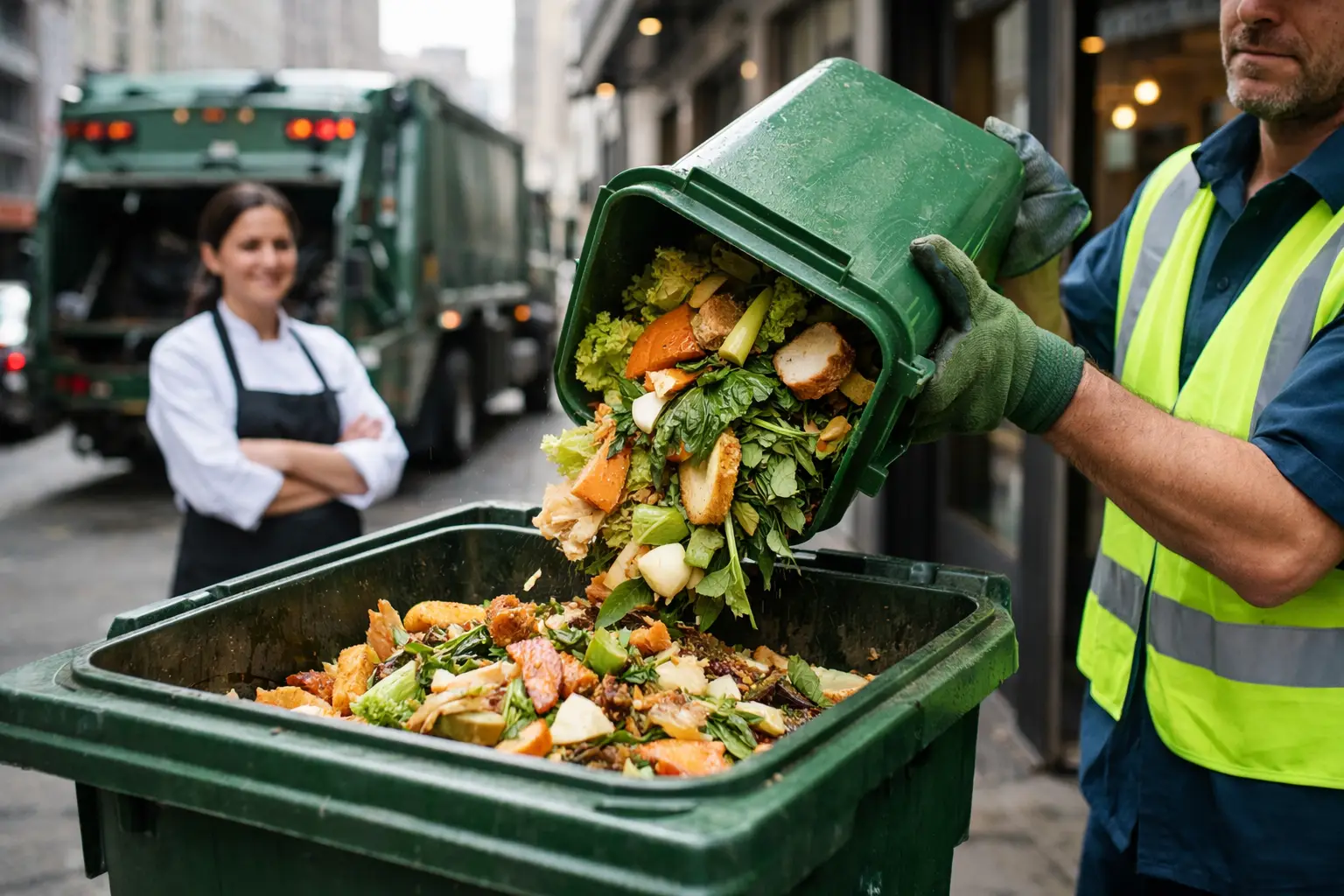
A restaurant manager cannot leave bags of food scraps beside the regular trash and hope they disappear cleanly. Someone has to collect them on schedule, transport them correctly, and deliver them to a permitted destination. So, who collects food waste for a business in New York City or Long Island? In most cases, it is a licensed commercial waste hauler providing a dedicated organics collection service.
The right answer depends on your location, the amount and type of food waste you produce, local requirements, and whether your business needs recurring pickup, extra capacity, or equipment. For a commercial operation, food waste collection should be treated as an everyday sanitation service, not a last-minute disposal problem.
Who Collects Food Waste From Commercial Businesses?
Commercial food waste is generally collected by private waste and recycling companies that offer organics service. These haulers place a container at the business, establish a pickup schedule, collect separated organic material, and move it through the appropriate disposal or processing stream.
That service is different from regular trash collection. Food scraps, spoiled produce, coffee grounds, bakery waste, and other approved organics need their own container and handling plan. When food waste is mixed with regular garbage, it can contaminate recycling, create odor, attract pests, and make it harder for a business to meet applicable waste rules.
A commercial hauler is usually the best fit for restaurants, supermarkets, delis, schools, office cafeterias, healthcare facilities, hotels, food manufacturers, and property managers overseeing buildings with food-service tenants. These businesses need predictable collection, not an occasional drop-off option.
For smaller generators, community composting programs or drop-off sites may be available in some areas. Those programs can be useful for households and very small quantities, but they rarely replace commercial service for a busy kitchen, retail food operation, or multi-tenant property. Volume adds up quickly, and staff should not have to transport heavy, leaking material off-site after a shift.
Why Food Waste Needs a Separate Collection Plan
Food waste is dense, wet, and fast-moving. A small restaurant can fill a container with prep scraps and spoiled inventory faster than expected, especially during weekends, holidays, catered events, or seasonal peaks. If pickup frequency does not match the waste stream, the result can be overflowing containers, unpleasant odors, pests, blocked loading areas, and frustrated staff.
Separating organics also gives a business more control over what is entering its trash stream. Many items commonly thrown away in kitchens can be collected as organics when they are kept free of plastic, metal, glass, and other contaminants. Depending on the accepted program, this may include fruit and vegetable scraps, meat, bones, dairy, bread, rice, pasta, coffee grounds, tea bags, eggshells, and soiled paper products.
Accepted materials are not identical for every program or processing facility. Compostable-looking packaging is a frequent source of confusion. A cup, utensil, liner, or takeout container labeled compostable is not automatically accepted in every organics stream. Your hauler should provide clear guidance on what belongs in the container and what must stay out.
Food Waste Collection Is Not the Same as Recycling
Single-stream recycling and organics collection solve different problems. Recycling is intended for designated dry materials such as paper, cardboard, metal cans, glass containers, and certain plastics. Food scraps do not belong in standard recycling containers because they can soil otherwise recyclable material.
Organics collection is designed for food and other accepted compostable material. At the processing stage, those materials may be composted, converted through anaerobic digestion, or handled through another approved organics process. The exact destination depends on the receiving facility and local infrastructure.
For businesses, the practical point is simple: use clearly labeled containers and give employees a system they can follow during a busy shift. A back-of-house setup with a trash container, recycling container, and organics container placed side by side often works better than asking staff to walk across the facility to sort material.
Choosing the Right Food Waste Hauler
Not every commercial waste provider offers the same organics capabilities, service area, container sizes, or collection frequencies. Before choosing a provider, start with an honest look at your operation. How much food waste do you generate in a typical week? Does most of it come from preparation, unsold inventory, plate scrapings, or tenant activity? Are there days when volume increases sharply?
A good provider will use those details to recommend a practical service plan rather than applying a one-size-fits-all schedule. A small cafe may need a compact container and regular pickup. A supermarket may need larger capacity and more frequent collection to manage spoiled produce and prepared-food waste. A school, office building, or retail center may need a plan that accounts for multiple users and varying levels of staff training.
Reliability matters as much as container size. Food waste cannot wait through missed pickups, bad weather, weekends, or holidays. Ask how service issues are handled, whether the provider can adjust pickup frequency as your needs change, and who you can contact when a container is damaged, full, or misplaced.
Pricing should also be clear. The lowest quoted rate may not be the lowest operating cost if the schedule is too light, containers are inadequate, or extra pickups become routine. The better fit is a service plan that keeps your location clean, supports compliance, and matches the real volume coming out of your business.
Container Placement and Daily Operations
Food waste collection works best when the container is convenient without getting in the way. Kitchens need accessible indoor collection bins for staff. Exterior containers need a secure, serviceable location that collection vehicles can reach safely. In dense New York City locations, that may require coordination around loading docks, shared waste areas, sidewalk access, building rules, and collection windows.
Keep lids closed whenever possible. This helps control odor, discourages pests, and keeps rainwater from increasing container weight. If your business uses liners, confirm that they are accepted by the organics program. Standard plastic bags can contaminate the load, even when the food waste itself is properly separated.
Training does not need to be complicated, but it must be consistent. Put simple signs where waste is generated, show employees a few common examples, and make one person responsible for checking containers during the first weeks of service. A quick correction at the bin is easier than dealing with a contaminated load later.
Property managers should also set expectations with tenants. If a building offers organics collection, tenants need to know which materials are accepted, where containers are located, and when they can place material out. Clear rules protect the entire property’s waste program from contamination and overflow.
Do Businesses Have to Separate Food Waste?
Requirements can vary by municipality, business type, food-waste volume, and changes to local regulations. New York City has commercial organics rules affecting certain businesses and institutions, while Long Island requirements may differ by county, town, village, or facility. That is why a business should confirm its specific obligations rather than relying on what another location does.
Even when a business is not currently required to separate every food scrap, an organics program can still make operational sense. It can reduce the amount of wet garbage in regular trash containers, improve cleanliness around the waste area, and prepare your team for future requirements. The trade-off is that separation takes staff attention and requires the right service schedule. Without training and dependable pickup, a program can become more work than it needs to be.
An experienced local provider can help assess your waste stream, container access, and service needs. Crown Waste Corp. works with commercial customers across New York City and Long Island to build scheduled waste, recycling, and organics plans around the way each site actually operates.
When a Roll-Off or Compactor May Be Needed
Most food-service businesses use front-load or similar scheduled containers for organics, but larger operations may need a broader waste solution. A food distributor, supermarket renovation, large event venue, or construction project with significant packaging and debris may require roll-off containers alongside regular organics collection.
Compactors can also help high-volume properties manage general trash more efficiently, though food waste should not automatically be added to a compactor stream. Moisture, odor, leakage, and the destination of the material all need to be considered. The best setup may use a compactor for general waste, separate recycling containers, and dedicated organics containers with enough pickup frequency to keep conditions sanitary.
The right food waste collector is the one that can keep up with your operation, explain the rules clearly, and show up when scheduled. Start with your real waste volume and access conditions, then build a collection plan your staff can maintain on the busiest day of the week.
Leave a Reply