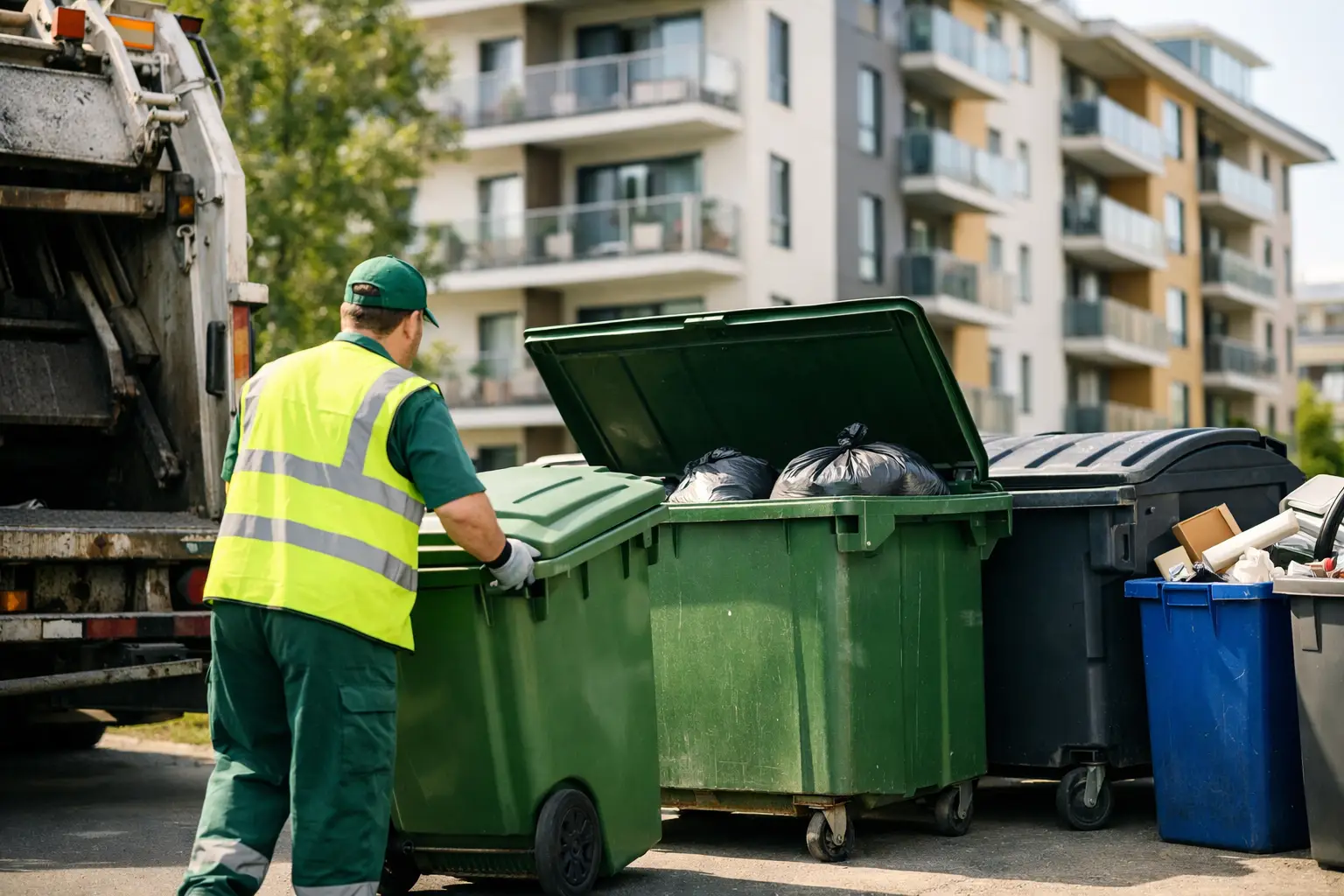
A missed pickup at an apartment building is never just a missed pickup. It can mean overflowing containers at the curb, blocked access for residents, odor complaints, pests, and a superintendent spending the morning answering calls instead of managing the property. Reliable waste removal for apartment buildings protects the daily operation of the building and the resident experience behind it.
For property managers and owners in New York City and Long Island, the right service is not simply a truck arriving on a set day. It is a waste plan built around the building’s resident count, available storage space, local collection rules, recycling requirements, and the amount of waste produced on weekends and holidays. When those details are handled properly, the property stays cleaner, safer, and easier to manage.
Why Apartment Building Waste Needs a Real Plan
Apartment properties generate waste every day, but the volume is rarely consistent. A building may have heavier disposal after move-ins, holidays, long weekends, renovations, or bulk deliveries. Smaller buildings may struggle with limited curb or enclosure space, while larger multifamily properties may need multiple containers, frequent collection, or compaction equipment to keep waste under control.
A standard schedule that looks fine on paper can fail quickly when it does not match actual usage. Containers overflow before collection. Recycling gets mixed with trash. Bags are left outside designated areas. Residents become frustrated, and building staff are left to clean up a problem that could have been prevented with the right service level.
The goal is to size collection around the property, not force the property into a one-size-fits-all arrangement. That starts with a close look at the building’s needs.
Start With Waste Volume and Pickup Frequency
The number of units matters, but it is not the only factor. A 20-unit building with frequent tenant turnover may produce more waste than a larger building with stable occupancy. Ground-floor retail, laundry rooms, package areas, offices, and shared amenity spaces can also add to the waste stream.
A dependable waste provider should help determine the proper container size and pickup frequency based on real operating conditions. This may mean increasing service during high-volume periods, adjusting the schedule after the first few weeks, or separating waste streams that are filling containers too quickly.
More pickups are not always the best answer. If a building has enough space, a larger container or a compactor may be more efficient. If access is tight or waste must be placed out for collection, smaller containers with more frequent service may be the practical choice. The best setup depends on the property layout and the way residents use the disposal area.
Recycling and Organics Are Part of Waste Removal for Apartment Buildings
Trash collection alone is not enough for many multifamily properties. Recycling requirements in New York can affect how buildings set up their collection areas, train staff, and communicate with residents. When recycling containers are poorly labeled or placed too far from the trash area, contamination becomes more likely and the system breaks down.
Single-stream recycling can make participation easier because approved paper, cardboard, metal, glass, and plastic containers can go into one designated recycling container. The key is making the process clear. Residents need visible signs, enough capacity, and containers that are convenient to use. Building staff also need a service partner that collects recycling consistently so material does not pile up and end up in the trash.
Organic waste is another consideration for qualifying properties and buildings that generate food scraps from residents, staff areas, or on-site food service. Organics collection can reduce the amount of trash sent out for disposal, but it needs the right container placement and collection frequency. Organic material left too long can create odors, especially during New York summers. A practical plan accounts for that reality from the beginning.
Keep Collection Areas Clean, Accessible, and Safe
The condition of a trash room, dumpster enclosure, or curbside staging area says a great deal about how a building is being managed. A clean collection area helps prevent odors, leaks, pests, and trip hazards. It also gives residents a clear place to dispose of materials correctly.
Container access deserves just as much attention. Collection crews need a safe, unobstructed path to the containers. Parked vehicles, locked gates, construction materials, snow, and loose bags can delay service or create safety issues. If the property uses a rear alley, loading area, or narrow driveway, those details should be reviewed before service begins.
For enclosed dumpster areas, property teams should think about drainage, lighting, and the ability to wash down the space. For buildings that stage bags at the curb, timing matters. Putting waste out too early can lead to torn bags, sidewalk obstruction, and complaints. Clear procedures for staff and residents make a noticeable difference.
Set Clear Rules for Bulk Waste and Move-Outs
Mattresses, furniture, appliances, renovation debris, and large cardboard boxes should not be treated like everyday household trash. These items can quickly overwhelm a container or block access to it. They may also require a different pickup arrangement depending on the material and local requirements.
Move-outs are especially worth planning for. A short notice to residents about disposal rules can prevent an entire hallway or curb area from becoming a dumping ground. For larger cleanouts, a roll-off container may be a better fit than trying to force bulky material into the regular waste stream.
A designated process for bulk items helps building staff avoid last-minute calls, illegal dumping concerns, and unnecessary cleanup costs. It also protects regular collection service from being disrupted by materials that do not belong in the container.
When a Compactor Makes Sense
For larger apartment buildings, dense multifamily developments, or properties with limited waste storage space, a compactor can be a practical long-term solution. By reducing the volume of trash, compactors can help properties store more waste in less space and may reduce the number of collections needed.
That does not mean a compactor is right for every building. The property needs adequate room, proper electrical access where required, and a waste volume high enough to justify the equipment. Building management should also consider how residents or staff will use the system and whether separate recycling and organics containers remain necessary.
When the conditions are right, compactor service can improve the appearance of the disposal area and reduce overflow risk. It is particularly useful where curb space is limited or where a high resident count creates constant waste pressure.
What to Expect From a Reliable Waste Partner
Apartment building managers need more than a quoted rate. They need a provider that answers the phone, understands local routes and access challenges, and responds when conditions change. A late pickup can become a resident issue within hours, especially in a building with limited storage.
Before choosing a service, ask how the provider handles missed collections, holiday schedules, weather disruptions, container repairs, and changes in volume. Confirm what is included in the service arrangement and whether the provider can support trash, recycling, organics, bulk removal, and temporary containers when needed. One accountable partner is often easier to manage than several vendors with unclear responsibilities.
Crown Waste Corp. works with property managers across NYC and Long Island to build service plans around the needs of the building, not a generic route schedule. That local accountability matters when a property needs a fast answer, an adjusted pickup, or a practical solution for a difficult collection area.
A Better Setup Starts With a Site Review
The most effective waste program begins at the property itself. Review where waste is generated, where it is stored, how crews access it, and when containers reach capacity. Speak with the superintendent or maintenance team, because they see the recurring problems that may not show up on an invoice.
Then build a schedule and equipment plan that gives the property room to operate. A little extra capacity is often less expensive than repeated overflow cleanups, resident complaints, and emergency service calls.
The right waste removal plan should fade into the background. Residents should find clean disposal areas, staff should know where materials belong, and property managers should be able to focus on the building rather than chase down the next pickup. A responsive local waste partner helps make that possible every day of the year.
Leave a Reply