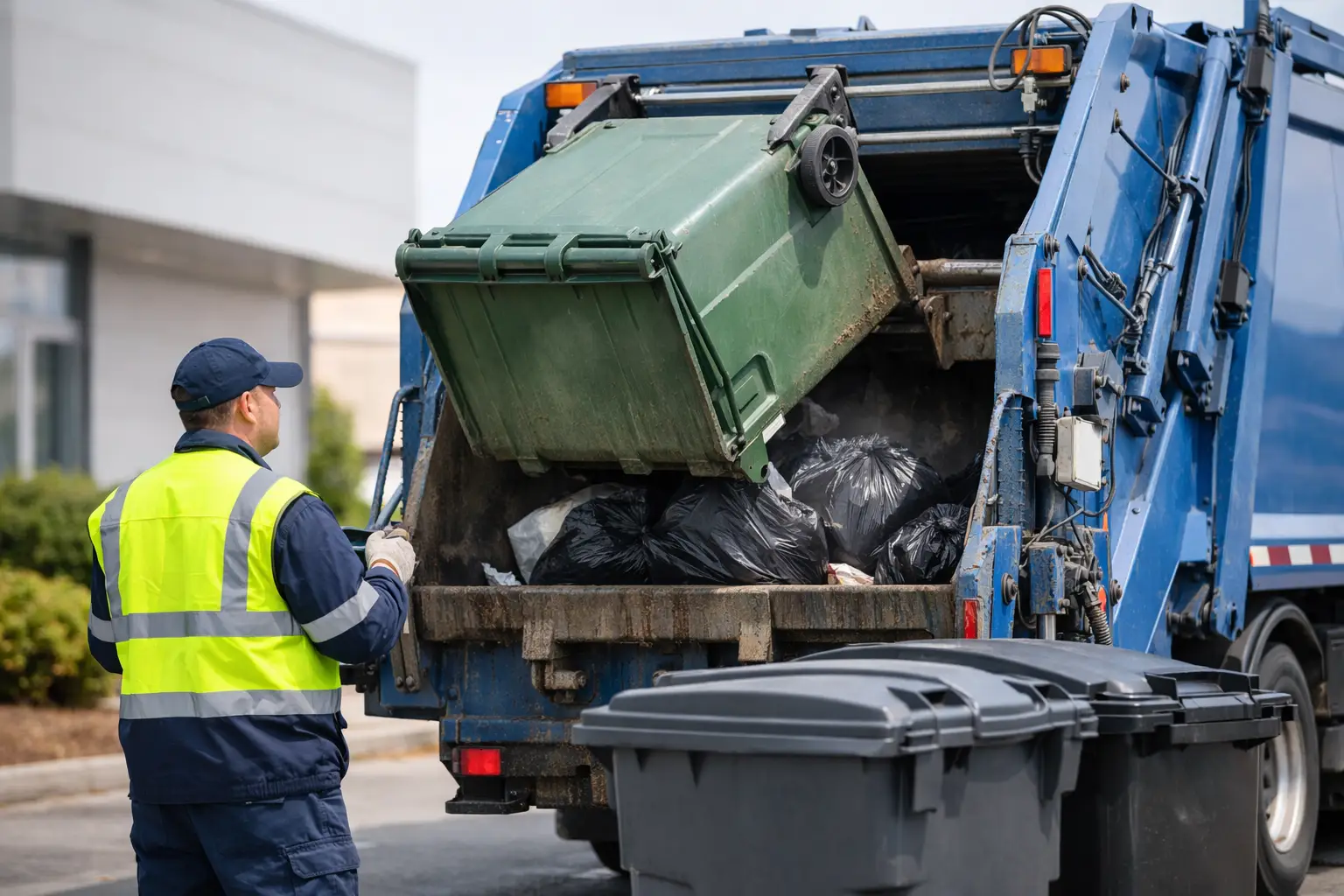
A missed pickup in New York is not a small problem. It can mean overflowing bags behind a restaurant, unhappy tenants at a mixed-use property, blocked loading areas, pest issues, and staff pulled away from real work to manage a sanitation mess. That is why commercial trash collection is not just another vendor line item. For businesses across NYC and Long Island, it is an operational service that affects safety, appearance, compliance, and day-to-day efficiency.
The right waste partner keeps your property clean, your schedule predictable, and your business moving. The wrong one creates headaches fast. If you are choosing or reevaluating service, it helps to know what good commercial collection should actually look like.
What commercial trash collection should cover
At its core, commercial trash collection means scheduled removal of business waste using the right containers, the right pickup frequency, and the right equipment for the job. But in practice, that can vary a lot depending on the property and the waste stream.
A small retail store may only need routine bagged waste pickup and single-stream recycling on a reliable schedule. A restaurant may need more frequent service, tighter timing, and separate organic waste handling. A construction site may need a roll-off container that can be swapped out quickly. A large property may need compactors to reduce volume and keep waste areas under control.
That is why one-size-fits-all service usually falls short. Commercial waste needs are tied to square footage, foot traffic, type of business, local regulations, storage space, and how much risk your operation can tolerate if service is late.
Why commercial trash collection matters more in NYC and Long Island
New York is not an easy market for waste removal. Space is tight. Access is tricky. Pickup windows can be narrow. Building managers have to deal with tenants, staff, and the public. Business owners need service that works around customers, deliveries, and city conditions.
Bad weather does not stop waste from piling up. Holiday schedules do not pause sanitation needs. In many areas, if trash sits too long, the consequences show up quickly in the form of odors, pests, complaints, or violations.
That local reality matters. A hauler that understands the neighborhoods, traffic patterns, property layouts, and service demands of NYC, Queens, and Long Island is in a better position to deliver dependable results. Businesses do not need generic promises. They need a provider that knows how to operate in this market every day of the year.
How to tell if your current service is costing you more than you think
Plenty of businesses stay with poor waste service longer than they should because the invoice looks manageable. The hidden costs usually show up somewhere else.
If your staff is spending time breaking down overflow, chasing customer service, moving containers, or dealing with missed pickups, that is a cost. If your property looks unkempt or smells bad near entrances, that affects customer experience. If waste and recycling are not separated correctly, that can create compliance issues or extra charges. If your dumpster or compactor is too small, too large, or emptied on the wrong schedule, you may be paying for inefficiency either way.
Good service should reduce management time, not add to it. It should also give you a setup that matches your actual waste volume instead of forcing your operation to work around the limitations of the hauler.
Choosing the right service plan for your business
The best commercial trash collection plan starts with a basic question: what do you throw out, how often, and where does it go before pickup?
For some businesses, recurring front-load or rear-load collection is enough. For others, recycling and organics need to be built into the schedule from the start. Restaurants, supermarkets, and food-related operations often need a more tailored mix because organic waste volume can be high and storage conditions matter. Office buildings and schools may need stronger recycling support. Construction and renovation jobs typically need roll-off service with flexible haul-away timing.
Container choice matters just as much as pickup frequency. Too few containers creates overflow and sanitation problems. Too many can waste space and money. Compactors can be a smart fit for properties generating high waste volume, but only if the site, usage level, and servicing schedule support the investment.
The right provider should be able to look at your location, understand how your business operates, and recommend a setup that makes practical sense. That means a custom quote based on service needs, not a generic package.
What reliable commercial trash collection looks like
Reliability is easy to claim and harder to deliver. For commercial customers, it usually comes down to four things: consistency, communication, flexibility, and accountability.
Consistency means pickups happen when they are supposed to happen, including weekends, holidays, and bad weather when needed. Communication means if something changes, you hear about it from a real person and get a clear plan. Flexibility means your service can adjust if your volume changes seasonally or your operation expands. Accountability means when there is a problem, it gets handled quickly instead of bounced around a call center.
That last point matters more than many businesses realize. When sanitation service fails, you do not want to explain your issue three times to different departments. You want a responsive team that understands the urgency and fixes it.
Compliance is part of the service, not an extra
Commercial waste service is not only about removing trash. It also has to support proper handling of recycling and organic waste where required. For many businesses, especially in food service and larger commercial properties, compliance is a real concern.
A provider should help you set up the right waste streams, right containers, and right service schedule so your team is not guessing. Clear guidance helps reduce contamination, avoid avoidable issues, and keep daily operations cleaner. This is especially important for businesses with multiple employees, rotating staff, or several tenants using the same waste area.
If your current hauler simply drops off containers and leaves the rest to you, that may not be enough. Strong service includes operational support that makes compliance more manageable.
Industries that need a more tailored approach
Not every business produces waste in the same way, and the service model should reflect that.
Restaurants and food businesses usually need frequent pickups, dependable timing, and organic waste removal that prevents odor and overflow. Medical offices need orderly, professional service that supports a clean property and separates routine waste handling from specialized disposal needs. Retail centers and office buildings often need a mix of tenant-friendly scheduling and recycling service that can scale with occupancy. Schools and institutions need consistency and safety. Construction sites need durable containers and responsive swap-outs that keep projects moving.
This is where local commercial providers often stand out. They tend to work more closely with the customer, adjust service as needs change, and build relationships over time instead of treating every account the same.
Price matters, but so does value
Every business watches costs, and waste service should be competitively priced. But the lowest number on a quote is not always the lowest cost in practice.
If cheaper service leads to missed pickups, overloaded containers, slow issue resolution, or equipment that does not fit your needs, the savings disappear quickly. A better value usually comes from fair pricing, a service plan that matches your operation, and a provider that is available when you need support.
That is especially true in high-demand service areas where delays can affect business operations fast. For many NYC and Long Island companies, dependable year-round service is worth far more than a low quote that falls apart under pressure.
A family-operated company like Crown Waste Corp. often appeals to businesses for exactly that reason. Customers want competitive pricing, but they also want to know who is responsible for the account and whether someone will pick up the phone when it matters.
What to ask before you sign a service agreement
Before choosing a commercial hauler, ask how often pickups can be scheduled, what happens on holidays, how missed service is handled, what container options are available, and whether recycling and organics can be managed under the same account. Ask how the quote is built and whether service can be adjusted if your volume changes.
You should also ask who you contact if there is a problem. That answer tells you a lot. A responsive service model is often the difference between a routine operation and a recurring frustration.
Commercial trash collection should make your business easier to run, not harder. If your current setup feels like something you are constantly managing, it may be time for a better plan, a better schedule, or a better partner. Clean properties, dependable pickups, and clear communication are not extras. They are what good service looks like every day.
Leave a Reply