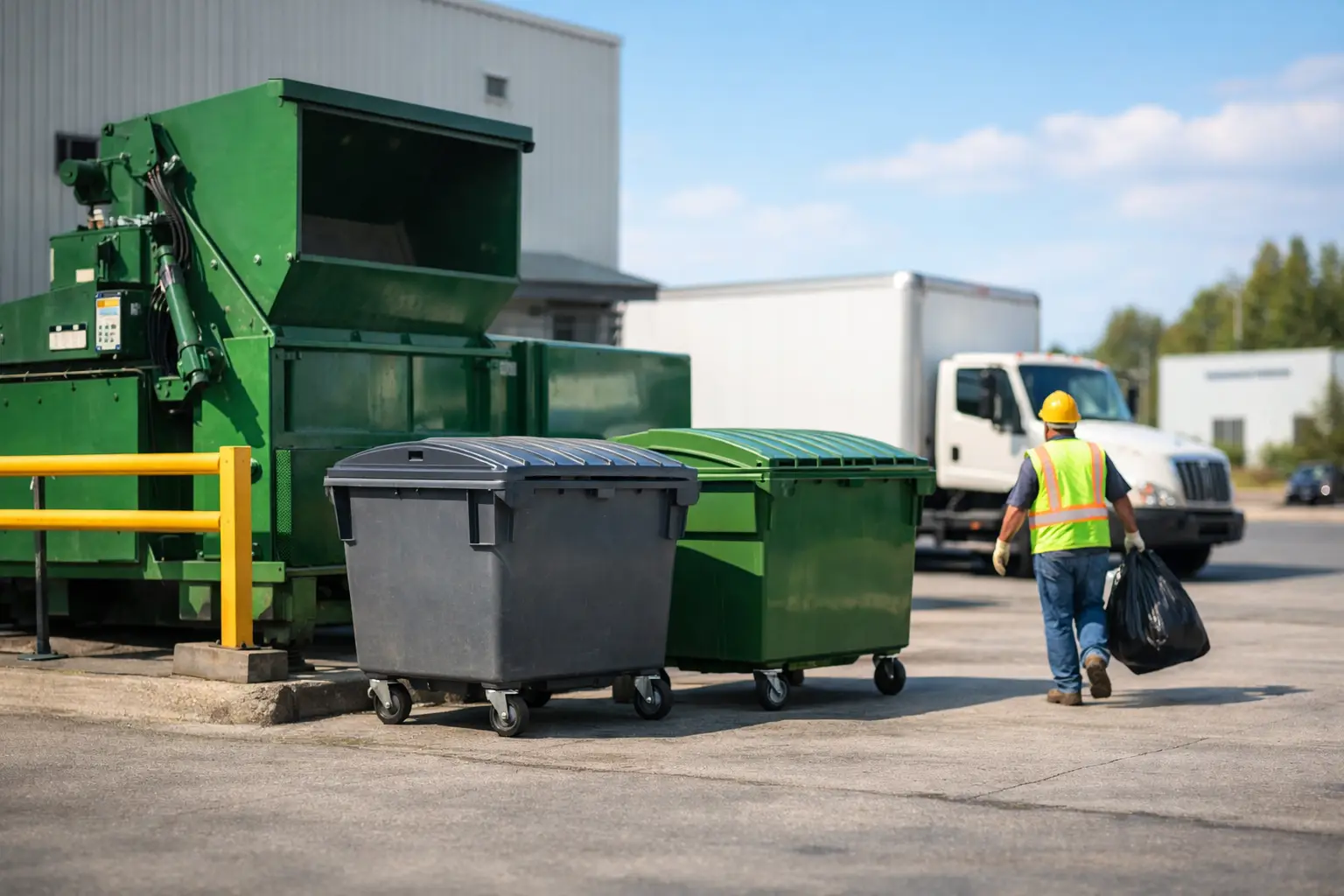
A leaking dumpster behind a busy restaurant, cardboard piling up in a retail stockroom, and extra pickups eating into the monthly budget – this is usually the point when commercial trash compactor rental starts to make sense. For many businesses in New York City and Long Island, a compactor is not just a piece of equipment. It is a way to control waste volume, clean up loading areas, and reduce the day-to-day strain on staff.
The right setup can save space and improve operations. The wrong one can create service issues, access problems, or costs that never pencil out. That is why it helps to look at compactor rental as an operating decision, not just an equipment order.
When commercial trash compactor rental makes sense
A compactor is usually the right fit when a business generates a steady stream of dry waste, bulky packaging, or bagged trash that fills containers too quickly. Retail stores, supermarkets, warehouses, office buildings, apartment complexes, medical facilities, and large restaurants often reach that point when open-top containers are no longer efficient.
In a dense market like NYC, space changes the equation fast. If your loading dock, alley, or service area is tight, reducing loose waste volume can make a real difference. Fewer overflowing containers mean cleaner surroundings, less windblown debris, and a lower chance of trash becoming a problem for tenants, customers, or neighbors.
The same is true on Long Island properties where the issue may be less about density and more about efficiency. If staff are making frequent trash runs, breaking down mountains of boxes, or calling for extra pickups every week, a compactor may be the more practical long-term option.
What a compactor actually solves
The biggest advantage is volume reduction. Compactors compress waste so businesses can hold more material in less space. That often leads to fewer hauls, lower exposure to litter and pests, and a more controlled waste area.
There is also a labor benefit. Without a compactor, staff may spend time flattening boxes, rearranging containers, or dealing with overflow. With the right equipment and pickup schedule, waste handling becomes more predictable.
That said, a compactor is not a cure-all. Wet waste, recyclables, and organics may need separate streams depending on the site and local requirements. If your waste profile includes a high percentage of food scraps, glass, or recyclable cardboard, the best solution may be a compactor paired with dedicated recycling or organics service rather than trying to push everything into one container.
Choosing the right type of commercial trash compactor rental
Not every property needs the same machine. The best fit depends on waste type, available space, access for collection trucks, and how often the site is serviced.
Self-contained compactors
Self-contained units are commonly used for wet waste or locations where liquid runoff is a concern. They are fully enclosed, which helps control odors and leakage. Restaurants, supermarkets, and food-related operations often benefit from this style because it keeps the waste stream more contained.
Stationary compactors
Stationary compactors are often a strong match for dry waste such as cardboard, paper, and general commercial trash. The compactor stays in place while the receiving container can be hauled away and replaced. These units are common at warehouses, distribution centers, retail sites, and office properties with a high volume of dry material.
Vertical compactors
For smaller footprints or lower-volume commercial locations, a vertical compactor can be a practical option. It does not offer the same capacity as larger systems, but it can still improve cleanliness and reduce container swaps where space is limited.
What affects cost
Business owners usually ask the same question first: is renting a compactor actually worth it? The honest answer is that it depends on waste volume, service frequency, site conditions, and the type of unit installed.
Monthly rental cost is only one part of the picture. You also need to consider hauling frequency, site preparation, container size, power access, and whether the equipment is handling dry waste or wetter material that requires a different configuration. In some cases, rental lowers total waste costs because the business needs fewer pickups. In other cases, the value comes more from cleaner operations and reduced labor than from a dramatic line-item savings.
The site itself matters too. A straightforward installation with easy truck access is very different from a tight urban property with clearance limits, traffic restrictions, or a loading area shared by multiple tenants. In New York, those details are not minor. They often determine whether a proposal will work in the real world.
Site conditions matter more than most businesses expect
A compactor should fit your property, not force your property to work around it. Before moving forward, it is worth evaluating how trash moves through your building now. Where is waste generated? How does staff bring it to the disposal area? Is there enough room for safe loading and service access? Can trucks enter and exit without creating a bottleneck?
For multi-tenant buildings and commercial corridors, timing can be just as important as placement. Pickup windows, neighborhood congestion, and building operations all need to line up. A dependable provider will look beyond the equipment spec sheet and think through the day-to-day service reality.
That local knowledge matters in places like Queens, Brooklyn, Manhattan, the Bronx, Staten Island, and Long Island, where no two sites handle waste exactly the same way. The most effective compactor programs are built around the property, not copied from a standard template.
Rental vs. purchase
For many businesses, rental is the better first move. It reduces the upfront capital commitment and gives the customer a way to match equipment needs with actual waste generation instead of making a large purchase based on estimates.
Rental also tends to make sense for growing operations, seasonal volume shifts, and businesses that want service and equipment support under one provider. If your waste profile changes, it is usually easier to adjust service under a rental arrangement than to be locked into owned equipment that no longer fits the job.
Purchasing can make sense for very stable, high-volume operations with long planning horizons. But for many commercial properties, flexibility and service support are more valuable than ownership on paper.
How to know if your business is ready
There are a few clear signs. Your trash area is regularly overflowing. You are paying for frequent pulls on loose waste. Cardboard and bagged trash are taking up too much space. Staff spend too much time managing the waste area. Or the appearance of the property is starting to suffer.
Another sign is when waste service becomes unpredictable because the current setup leaves no room for normal fluctuations. A holiday weekend, a promotional event, or a busy season should not throw the whole property into disorder. A compactor can provide the buffer that keeps operations under control.
What to ask before you sign
Before starting a commercial trash compactor rental, ask how the provider determines equipment size, how pickups are scheduled, what waste types the unit is intended for, and what site conditions could affect installation. You should also ask how quickly service issues are handled and whether the provider is equipped to support your location year-round, including weekends and holidays if your business operates through them.
A solid waste partner should be able to explain the trade-offs clearly. If a smaller unit will save space but require more frequent service, you should hear that upfront. If a self-contained unit costs more but is the better fit for wet waste, that should be part of the recommendation. Good service starts with accurate planning.
For businesses that want a responsive, local option, Crown Waste Corp. approaches compactor solutions the same way it approaches the rest of commercial waste service – with practical recommendations, reliable collection, and attention to how each property actually runs.
Commercial trash compactor rental is really about control
Most businesses do not rent a compactor because they want another piece of equipment on site. They do it because they want fewer disruptions, a cleaner property, and a waste system that keeps up with the pace of the business. When the setup is right, the loading area stays cleaner, pickups become more efficient, and managers spend less time chasing trash problems.
If your current container setup is constantly being pushed past its limits, it may be time to stop treating overflow as normal and start looking at a system built for the volume you actually have.
Leave a Reply