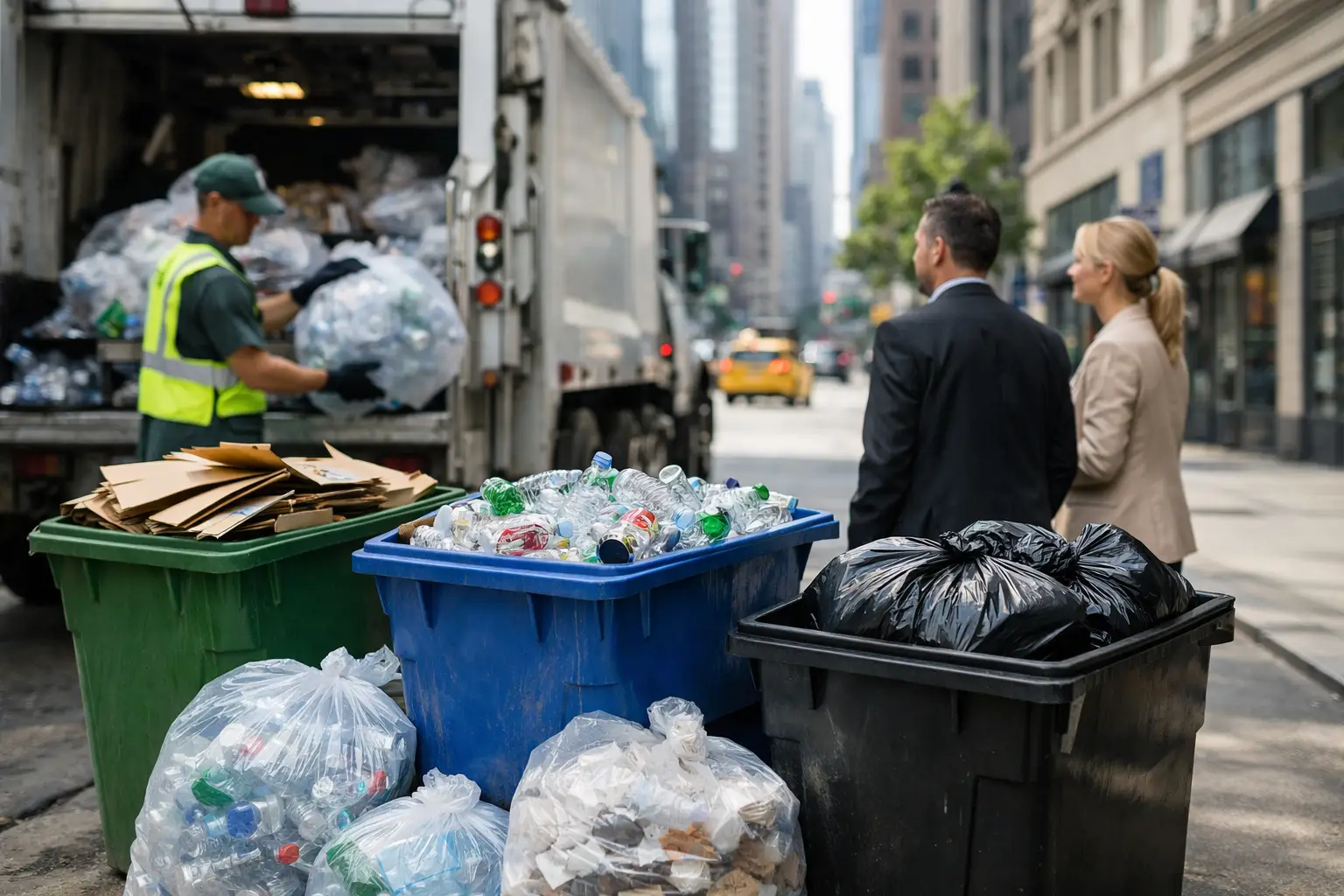
Missed recycling pickup in New York City is not a small problem. It means overflowing bins behind the building, staff wasting time sorting material twice, tenant complaints, and avoidable attention from inspectors. That is why choosing the right commercial recycling service NYC businesses rely on comes down to more than a truck route. It is about consistency, compliance, and having a local partner that understands how your property actually operates.
For many businesses, recycling starts as a box to check and quickly turns into an operational issue. Office buildings need clean loading areas and predictable pickups. Restaurants and supermarkets deal with cardboard, containers, and food waste on tight schedules. Retail stores need service that keeps back rooms clear without disrupting customer traffic. Property managers need one provider that shows up, communicates clearly, and adjusts as needs change.
What a commercial recycling service in NYC should actually solve
A commercial recycling program should make your operation easier, not add another layer of management. In a city as dense and fast-moving as New York, that means service has to fit the realities of your building, your hours, and your waste stream.
The first issue is pickup reliability. If containers are collected late or inconsistently, recycling stops being organized almost immediately. Cardboard piles up. Tenants use the wrong bins. Staff members start throwing recyclable material into trash containers just to keep areas clean. A dependable schedule matters more than promises on paper.
The second issue is compliance. NYC businesses are expected to separate recyclable materials properly, and requirements can vary depending on the type of operation. A provider should help make the process clear. That includes identifying the right recycling stream, providing suitable containers, and setting service frequency based on actual volume rather than guesswork.
The third issue is labor. Business owners and facility teams should not have to spend hours managing what the hauler should already be handling. Good service reduces touchpoints. It keeps the process simple for employees, custodians, porters, and site managers.
Commercial recycling service NYC: what businesses need most
In practice, most businesses are looking for the same few outcomes from commercial recycling service NYC providers.
They want pickups that happen when scheduled, including weekends, holidays, and bad weather when needed. They want fair pricing that reflects the size of the account and the volume being generated. They want a company that answers the phone, makes route adjustments when necessary, and does not treat every customer like a standard template.
That local responsiveness matters in NYC. A medical office in Queens, a restaurant in Brooklyn, and a mixed-use property on Long Island do not produce the same material or operate on the same timeline. Service has to be shaped around the business, not the other way around.
Single-stream recycling is often the best fit for commercial properties because it simplifies participation. Staff can place accepted recyclables into one designated container instead of sorting multiple categories at the source. That saves time and makes it easier to maintain consistency across shifts. For a lot of businesses, simplicity is what keeps the program working after the first month.
Still, simple does not mean one-size-fits-all. Some accounts need more frequent cardboard collection. Others need recycling paired with regular trash service and organics removal. Larger facilities may benefit from compactors or more durable container setups to reduce clutter and improve handling.
The biggest service gaps businesses run into
A lot of frustration with recycling service starts with poor planning at the beginning. The quote may look fine, but the service model does not match the building.
One common problem is underestimating volume. If a provider assigns too few containers or too few pickups, materials overflow quickly. Another issue is poor site fit. A container that works for one property may be impractical for another because of loading dock access, alley width, tenant traffic, or limited storage space.
Communication is another dividing line. Large haulers can sometimes make customers feel like route numbers instead of accounts with real operating needs. When service changes are hard to request or billing is hard to understand, the recycling program becomes one more headache for a property team already managing enough.
That is where a more hands-on provider stands out. Businesses need accountability. If service has to change because of seasonal volume, a renovation, tenant turnover, or expanded hours, the hauler should be able to respond without making the customer start over.
How the right recycling setup changes day-to-day operations
A strong recycling plan improves more than appearance. It can make daily operations smoother across the property.
For restaurants and food businesses, that may mean separating cardboard and mixed recyclables from general waste so the back-of-house stays cleaner and pickups stay efficient. For office buildings, it often means placing the right containers in the right collection points so janitorial teams are not consolidating loose material at the end of every shift. For retail centers, it may mean creating enough capacity for shipping boxes and product packaging during busy delivery periods.
Property managers also benefit when waste and recycling are coordinated under one service strategy instead of split across multiple vendors. Fewer vendors generally means fewer scheduling conflicts, clearer responsibility, and less time spent tracking service issues.
There is also a cost angle, although it depends on the waste stream. Better recycling separation can reduce the amount of material going into more expensive disposal channels. That does not mean every property sees immediate savings, because service frequency, equipment, contamination, and building layout all affect the numbers. But cleaner separation usually leads to a more efficient program over time.
Choosing a commercial recycling service NYC provider
When evaluating a commercial recycling service NYC provider, the most useful question is not who offers the lowest initial quote. It is who can support the account consistently over time.
Ask how the service schedule is built. Ask whether the company handles only recycling or can also manage trash and organics. Ask what happens when volume increases unexpectedly. Ask how quickly someone responds if there is a missed pickup, container issue, or holiday schedule adjustment. Those details tell you more than a sales sheet ever will.
It also helps to look at whether the provider understands your sector. A supermarket has different needs than a school. A medical office has different expectations than a construction site. Experience with your industry usually leads to better container recommendations, more realistic pickup frequency, and fewer problems after service begins.
Local knowledge counts too. NYC routes are not simple. Building access, street conditions, traffic windows, and neighborhood restrictions all affect service quality. A company that knows the city and works it every day is usually better prepared to keep service on track.
For businesses that want one dependable point of contact and practical service planning, a local operator such as Crown Waste Corp. can offer an advantage. The value is not just in hauling material away. It is in having a team that understands the pressures of keeping a commercial property clean, compliant, and running on schedule.
Why tailored service beats generic service
No two commercial properties generate waste and recycling in exactly the same pattern. Even within the same industry, volume can swing based on season, occupancy, foot traffic, and hours of operation.
That is why custom quotes matter. A tailored service plan accounts for container size, pickup frequency, material mix, and site access. It can also leave room to scale. A business adding locations, extending hours, or renovating space may need service to change quickly. A provider that can adapt is worth more than one that simply offers a standard route.
The best recycling service does not call attention to itself. It works in the background. Containers are available where they should be. Pickups happen when promised. Billing is clear. Questions get answered. Your staff can focus on the business instead of the dumpster area.
If your current setup creates complaints, clutter, or confusion, the issue is probably not recycling itself. The issue is that the service is not built around how your business runs. In New York, that gap shows up fast. The right partner closes it just as fast – with dependable pickups, practical container options, and support you can actually reach when you need it.
A good recycling program should leave your operation cleaner, easier to manage, and better prepared for whatever the week brings.
Leave a Reply